
How to build a brand on a budget
20 Jan 2026
We always assume brand is something for big companies, big budgets and big teams. This isn’t the case. Brand is for everyone and it’s more important than ever before.
This article aims to kick-start, question and simplify the process of building a strong foundation for your brand to thrive.
What we cover
- Why build a brand
- Finding your brand's why
- How does your brand act, talk and show up
- How success comes from unexpected thinking
- How to craft the story of your brand
- Why sales and marketing are friends
- Make your brand hard to kill
01. Why build a brand?
Seriously… why even bother?
Why spend hours investing time, energy and money in creating one?
This is a journey we’ve been on recently with a start up in the sustainability space.
Without ever thinking about the word brand. They have gotten their start up off the ground, with revenue in the millions, growing the team, culture and future pipeline.
So why start thinking about brand?
When we kicked off the project, we spoke with the founders and employees, as well as their clients and partners. What we heard is that they have high regard for the quality of what they do. Their attention to detail. That they were good, honest, decent people. No matter what, they always figured it out and came up with a solution.
They have value in the market. And value is what brand is about.
Brand, at its best, comes from within. It’s then how it gets articulated.
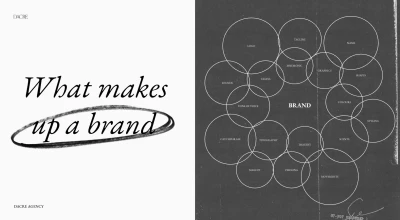
Traditionally, through things like logos, taglines, names, shapes, colours, scents, imagery, graphics, type, movements, mascots, catchphrases, tone of voice and sounds.
But brand is everything and anything the company does. It all adds up. It’s why brands that say they don’t invest in brand still have a brand.
They just don’t call it that.
The better articulated, connected, distinctive and consistent the web is, the more value that brand has.
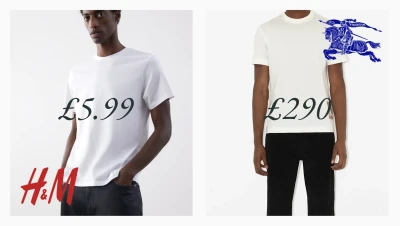
It’s why you have a white t-shirt selling for 5.99 at H&M and one selling at £290 at Burberry.
It’s why brand on paper is completely irrational. Why would anyone in their right mind buy an almost identical white t-shirt for an eye-watering amount?
It just doesn’t make sense? Look around your house and in your garage. Why do you drive the car you drive? Why do you buy the same cereal, yogurt, and washing powder each week?
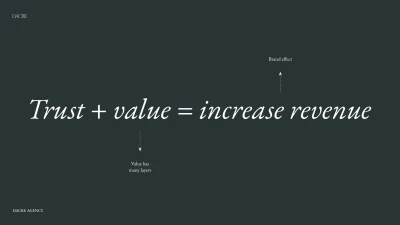
Because it’s valuable to you. You know it, you trust it, you like it, it makes you feel good… even if in a very small way.
Instinctively, you're doing all of this without even thinking about it.
Brands invest millions upon millions to do this.
I remember arriving in a small village in a remote part of Kenya. There was very little there. Apart from one man, behind a small stand, selling bottles of Coca-Cola.
The distinctive red. The iconic glass bottles. The same taste. Same trust.
But for many, this type of size and scale of brand can put people off even trying.
Especially the small to medium-sized companies. It feels out of reach, big and expensive, full of agencies, gurus and complicated terminology.
This doesn’t have to be the case. And that isn’t the case. Brand simply is a way to articulate your value to the outside world.
02. Finding your brand's why
Most brands, even large established ones, don’t have clear answers to these questions.
Most brands also overcomplicate this part. Throwing money at it rather than spending time and energy.
Why do you exist? What problem do you solve? Why now? Who is your antagonist?
What do you do? How do you create value? How do you deliver it? How do you capture it?
To whom? Who buys from you? When do they buy? How do they buy? How often do they buy?
Now you can get fancy with templates or structures to help answer them. In reality, you just need to answer the three burning questions.
It’s hard and it should be hard. It’s why many brands don’t do it.
The simpler, clearer and more concise you do this… the better.
So whilst you’re sitting patiently waiting for these questions to magically arrive warmly in your lap. Some things that help.
Ask yourself this: who is your antagonist? What are you punching up against?
We do this a lot in workshops. It’s an easier way to clearly understand what your brand is about when we know what you’re against.
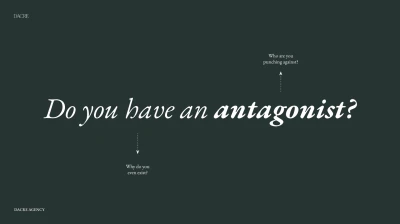
For DACRE? We’re fighting against the typical advertising and creative agency experience. They promise the world, cost the earth and are slow to react.
Want to understand what you do and to whom?
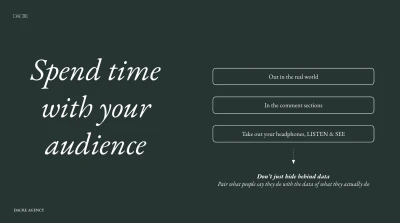
Always follow the money. Then ask people why. This doesn’t have to cost loads. Get out in the real world. Take a phone. Ask people on the street and go digging in the comment sections of Instagram, Reddit and TikTok.
Follow your gut, your nose and your intuition and experience of humans. Our lives are messy, complicated and unpredictable.
And take out your headphones. Listen and see.
Say you're hoping to launch a product in a supermarket, stand in the aisle where it might go and watch and listen to how people interact with similar products.
Ask them about it. Set up a stand and invite people to try your product. . Make it fun, instant and interactive.
When I started working with a food delivery app, I decided to become a rider for them. I went through the whole recruitment process and did 2 weeks' worth of shifts on my bike zipping around the streets of London.
I got an instant pulse check before I had even started working with them.
I got an idea of what people bought, how riders felt and the experience of what makes that business tick.
I arrived on day one knowing more about the state of the business than the people who had been working on that brand for 5 years.
“When the data and the anecdotes disagree, the anecdotes are usually right” Jeff Bezos
03. How does your brand act, talk and show up
Most people skip to this part.
Most when they talk about brand, skip the why and jump straight into what I call ‘Forming the how’ focused on logos, colours, and taglines.
If you’ve done your 'why' properly, forming your how is a visual articulation of it.
It comes down to three main steps. These usually help you head in the right direction.
What you look like
This is centred around brand identity so logos, colours, typography and photography.
Many look at their competitors, the category they're in and put a twist on it.
This is why so many brands in a category are homogenised.
Be interested in the world and get out there. See it, travel it, taste it. Read books, go to galleries, be with people and your audience.
If you do this your visual articulation becomes routed in the people it's meant to be for i.e. real people. Not just what you think you should do.
Steal from outside your category, take inspiration from other areas of the creative industries. The aim is for it to be distinctive, memorable, recognisable and timeless.
Easy to say, hard to do.
Your gut is usually pretty good here.
How you talk
Are you casual and funny, or direct and serious?
Walk the shop and office floors. You’ll find the tone of your company in the side Slacks, WhatsApps and around the coffee machine pretty quickly.
You can build out personas, characters, or whatever new thing someone has come up with. It usually complicated it quickly.
Just write out what you do sound like and what you don’t. Having both normally gives a good amount of room to use it across channels, cultures and platforms.
Where you show up
Most would worry about this later, in the comms planning stage. This is too late.
If your value comes from designing things people want… where they hang out and how you get it there is equally, if not more important.
The channels and platforms that you’re going to be communicating on need to work within what you’ve set out in your why and how. The medium is the message.
The most potent brand lever
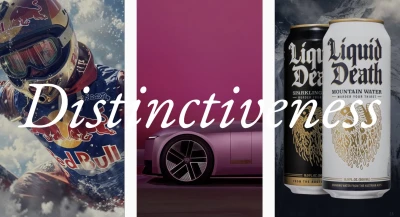
Distinctiveness. This is one of the most potent levers in brand.
When I created DACRE, I went through all the agency websites I knew. They all had very similar branding. Monochrome with big bold text… with some outlandish statement about culture.
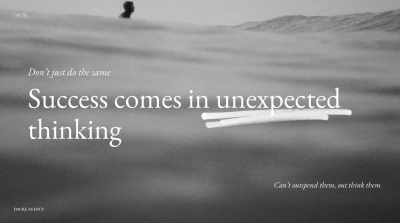
So I decided to do the opposite and do it in my own way. One line I always come back to is success comes in unexpected thinking.
The easy route is to do the same. It worked for them, why not us? It takes the ‘no one got fired for buying IBM’ principle.
The other route is outspending them.
It’s true that big brands, through simply being big, have an unfair advantage in the market. So if you can’t outspend them, you have to outthink them. You have to look in other places for different solutions, done in your own way.
The best way to do this? Have a limited budget. You quickly become inventive in new and interesting ways to show up. Why? Because you have to think. You can’t tread the paved path, you have to hike through the hills, find your own way and make the best of what you’ve got.
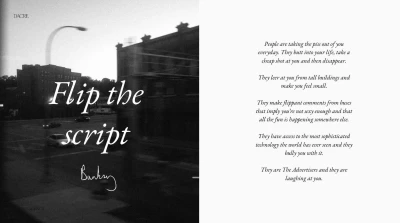
Brands' default is to butt into people's lives, telling us what we should do, how we should look, how we should act, be and do with our lives. Looking down from up high. This doesn’t have to be.
04. How success comes from unexpected thinking
Don’t build a company and advertise in a way that you end up turning out to be the villain.
Do things well. Do the things that are long, boring and hard.. and are right. Do them better than everyone else and do it consistently.
The best way to build a brand is to think about how you can build the smallest version of it. The smallest version of success. What is your first milestone? Then reach for the next.
It won't be perfect, if you’re ambitious, this is frustrating. Comparing yourself to success stories and brands years and budgets down the line. We forget that the destination of success is very long, very squiggly and usually very scenic.
The smooth path and paved way are reserved for the mediocre, average and mundane. It’s because it’s the path of least resistance. It’s because people see the other and see hard work, the unknown and lack of control.
We live in an age where the power of the individual is starting to compete with the team.
We will see over the next decade the first billion-dollar one-person company. We live in an age where someone armed with the right tools, experience, thinking, attitude, vision and resilience can create something that can compete with a company worth billions, has tens of thousands of people and a global presence. Building it at a fraction of the cost.
In any company, in any brand, big or small, this attitude can be crafted.
We default to spending huge sums of money to get someone else to think, create and build because of our lack of self-confidence and belief.
Sometimes, we should be aware of what we can’t do and are better at; that is fine, that is smart and that is where to invest. But we can do more than we think and we should take time to reflect on that.
Building a brand is as much about the sum of the people and ambitions who shape it as the colours, logos and taglines.
When we say the best brands are human, it means they’re built by people who care, each weaving their own DNA into it.
Brands are the sum of their parts.
05. How to craft the story of your brand
Now the craft of it all. The craft of the story.
These two words are overused and a lot of the time misunderstood.
Crafting is about making, creating and traditionally by hand. The human touch. We have many tools other than our hands nowadays.
Let’s not forget, the hands are still the ones that tap around the keyboard, scribble with the pen and guide the camera… we might be further removed from the impact of our actions but still, for now, it comes from within us.
Made by people for people. And as the years slide on, the power of this will become more and more potent.
Stories are vehicles. Containers of emotion, symbols and signs. Connected together to disperse information. To be remembered, to be felt and to be shared and passed on. They’re moving beasts.
So when we talk about stories and brands, it’s how we connect information and package it up.
The craft and the story are closely intertwined. There are three parts I find helpful:
Have a clear message: What is the benefit to your audience? What is the value that you’re communicating?
Fit to the medium: A handwritten note, a TikTok video and a Substack post are all very different.
Do it over and over: This isn’t a one-off. This is a growth engine that is constantly being tweaked.
Have a clear message
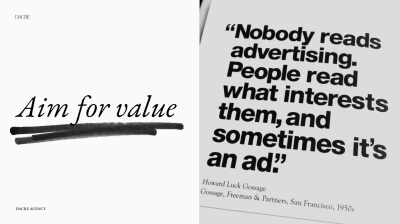
What is the benefit to your audience? What is the value that you’re communicating?
This should all fall off your proposition of why you exist and the value people get from working or buying from you. The stronger it is and the clearer the message, the better the impact.
I remember working with a client who ,when each quarter rolled around, presented their campaigns and messaging in the market.
They had over 40+ at any given time. 40… this is when you try to be everything to everyone. Because marketing is the department that it’s all thrown to…. believing it can solve it all.
Focus is key here. The power of no is how you get focus.
And focus is what will give you singularity and clarity to your audience in the value exchange. If not, you spend a lot of time, energy and money to cannibalise your own brand. Be disciplined.
Fit it to the medium
A TVC, a TikTok and a Substack post are all very different.
What message works within the medium and vice versa?
The same principles apply. You don’t have to be everywhere and post everything across every channel. Be extremely selective and build. Don’t get caught up in newness. Don’t fall for the death of this or that channel.
Test, learn and iterate. If something works, do more of it. This is a growth engine that is to be constantly tweaked.
06. Why sales and marketing are friends
In the marketing/advertising world, we seem to have some sort of allergic reaction to sales.
God forbid what we do actually sells something.
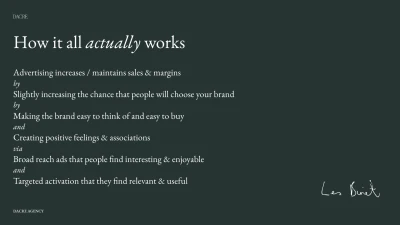
The only reason marketing exists is to sell something. Now read that over and over.
Then measure success accordingly…. over the short, mid and long-term. Analyse it, make sense of it and then get back to creating something people find valuable.
Building a brand or anything worthwhile is hard. Really hard.
Some of this you may feel I’m making sound easy. It is and it isn’t.
It’s hard because it takes extreme focus, decisiveness, dedication and commitment for a very long time.
As humans, we’re not always great at that. Because it’s uncomfortable and painful at times.
But really, the principles, the burning questions, are simple. They’re just hard to answer and put into practice.
And if it were easy, then everyone would do it and everyone who did would be a success.
From my limited time in this world and running a business myself, I can sum it up as the long, boring and really hard stuff is always the stuff that is probably the option to go for vs the easy paved route.
If you’re lucky and have a large budget to invest in building a brand? Great…. don’t touch it.
Mad advice?
Maybe but really the less you have the more you become resourceful, inventive and more creative with how you get people interested.
It’s a balance, you need enough to build and distribute and not too much it corrupts and makes you take shortcuts, lose control and become lazy or unfocused.
It’s because you’re trading money for time and having to think. This is something actually in our AI-driven world to think long and hard and do stuff that is somewhat uncomfortable and painful, will be a luxury.
Now big can outspend you, that is true and big will normally just get bigger but not always and not forever; it’s how market share is stolen.
It’s why we have disruptors in the market. It shakes things up, even for a moment in time and reconfigures the markets, makes them more competitive, and better and levels it all up.
It’s progress. It’s innovation. It’s what makes the world go round.
07. Make your brand hard to kill
Know your numbers. Disrupt your budget wisely. Be the cockroaches of the corporate world. Be relentlessly resourceful.
What would your accountant or your CFO say? Bulletproof it in every possible way.
Make it clear what and what not to do with the brand. Set a clear course for the next 5 years.
This is what the best brands do. They set the vision and then execute, execute and execute.
Things evolve and change but the fundamental principles of your brand shouldn’t. We’re hooked on newness. We change things for change's sake, not to find what is better.
And finally…. the most important part of this.
Do this, go on this journey of building brands, have fun, I’m on it too, looking into the horizon, not knowing where it will land, work, or whatever.
But what I can say is don’t batter yourself in the process or forget why you’re doing it.
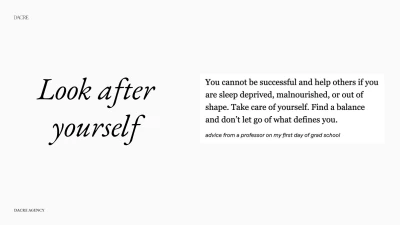
Look after yourself and put the things that really matter in your life first.
“Because in the end, you won't remember the time you spent working in the office or mowing your lawn. Climb that goddamn mountain” Jack Kerouac
What we do at DACRE
DACRE guides brands through moments of change. We revive forgotten companies and scale new ones by building brands that people want to buy from.
We deliver change across three services.
We deliver change across three services. Positioning brands in what customers value, creating distinctive identities & campaigns that enrich.
Enjoyed reading this?
You can read more of our thinking on our blog and in our brand reports.